
Flip phones snapping shut in glossy magazine spreads, MTV looping music videos late into the night, mall corridors humming with fluorescent light and cologne-heavy air — the early 2000s were not subtle. They were loud, synthetic, and unapologetically visible. Clothing followed suit. Low-rise jeans sat precariously on hips, logos announced themselves without restraint, and accessories did as much narrative work as the garments themselves.
Y2K fashion refers to the clothing and aesthetic trends that emerged in the late 1990s and early 2000s — a period shaped by technological optimism, pop culture excess, and a willingness to experiment with silhouettes and materials that often prioritized spectacle over practicality.
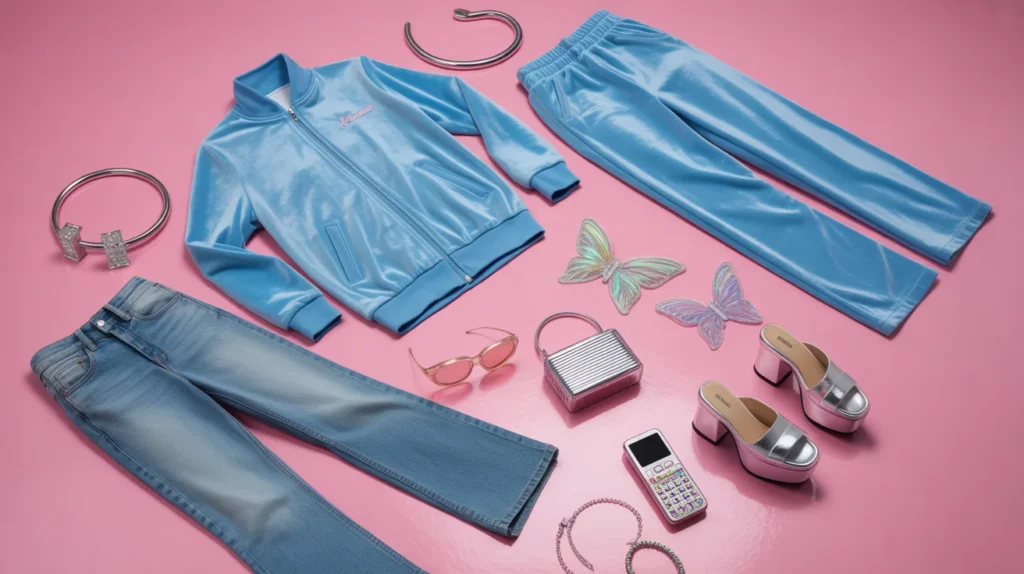
The term “Y2K,” originally tied to the Year 2000 computer bug, has since been repurposed into a cultural shorthand for this visual language: metallic fabrics, cropped proportions, visible branding, and a kind of cheerful maximalism that defined how a generation dressed.
What follows is not just a catalog of trends, but a closer look at the forces that shaped them, the people who amplified them, and the reasons they have returned — not as replicas, but as reinterpretations.
Where Y2K Fashion Came From — The Cultural Forces Behind 2000s Style
Y2K fashion did not emerge in isolation. It was a response — and in many ways a rebellion — against the minimalism of the 1990s. Where the previous decade favored neutral palettes and understated silhouettes, the early 2000s leaned toward excess. Color returned with intensity. Fabrics became shinier, tighter, more synthetic. Visibility replaced restraint.
Part of this shift can be traced to the technological mood of the time. The late 1990s and early 2000s were defined by the dot-com boom and a widespread belief that the future would be faster, brighter, and more connected. Devices like the Motorola Razr, portable CD players, and early MP3 players were not just tools — they were status objects. They appeared in outfits, in hands, in photographs, as extensions of identity.
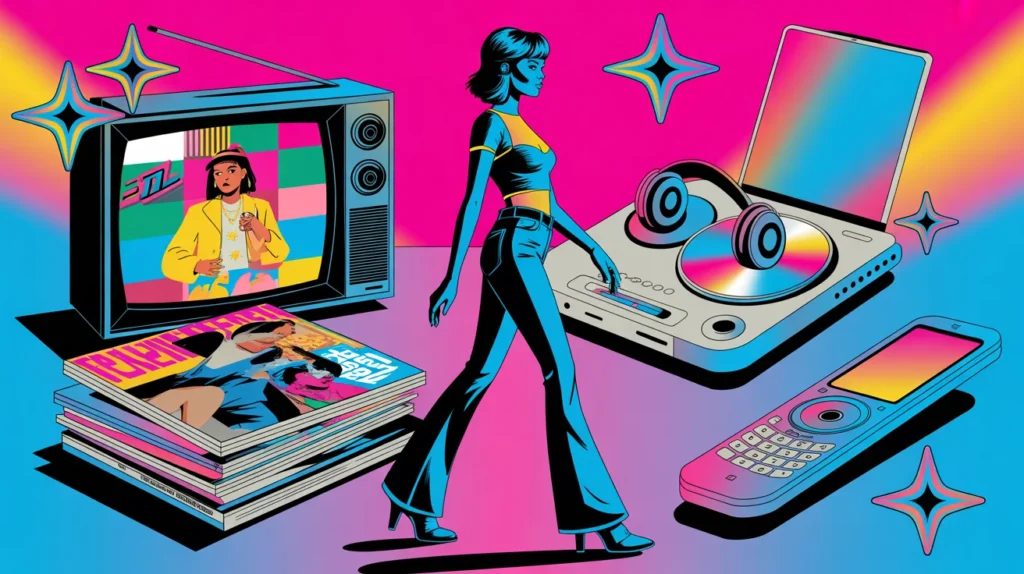
Pop culture accelerated everything. MTV functioned as a continuous runway, where artists like Britney Spears and Christina Aguilera introduced trends that were adopted almost immediately. Teen films — Legally Blonde, Mean Girls, 10 Things I Hate About You — offered stylized versions of youth culture that filtered directly into everyday wardrobes. Reality television, particularly The Simple Life, turned personal style into a form of serialized storytelling.
Celebrity visibility played a crucial role. Paparazzi culture meant that off-duty outfits were no longer private; they became reference points. Jennifer Lopez’s green Versace dress at the 2000 Grammys was not just a red carpet moment — it was so widely searched that it contributed to the creation of Google Images. Fashion was no longer confined to runways or magazines; it moved in real time.
After 2001, the tone shifted slightly. The overt futurism of early Y2K — metallics, chrome, cyber-inspired silhouettes — gave way to something more grounded, more logo-driven, more rooted in American casualwear. Denim became dominant. Branding became louder. This transition marked the rise of what is now often called McBling, a closely related but distinct phase of the era.
10 Defining Y2K Fashion Trends
1. Low-Rise Jeans
Low-rise jeans were the decade’s most polarizing silhouette — cut so low they redefined the waistline entirely. Popularized by Britney Spears and Christina Aguilera, they often came distressed, embroidered, or studded with rhinestones. Their revival today is more restrained, typically adjusted upward slightly and paired with structured outerwear to restore proportion.
2. Velour Tracksuits
Juicy Couture’s velour tracksuits turned loungewear into a public statement. The fabric was soft, but the message was not subtle — especially when “Juicy” appeared in rhinestones across the back. Paris Hilton and Jennifer Lopez made them synonymous with off-duty glamour.
3. Baby Tees and Crop Tops
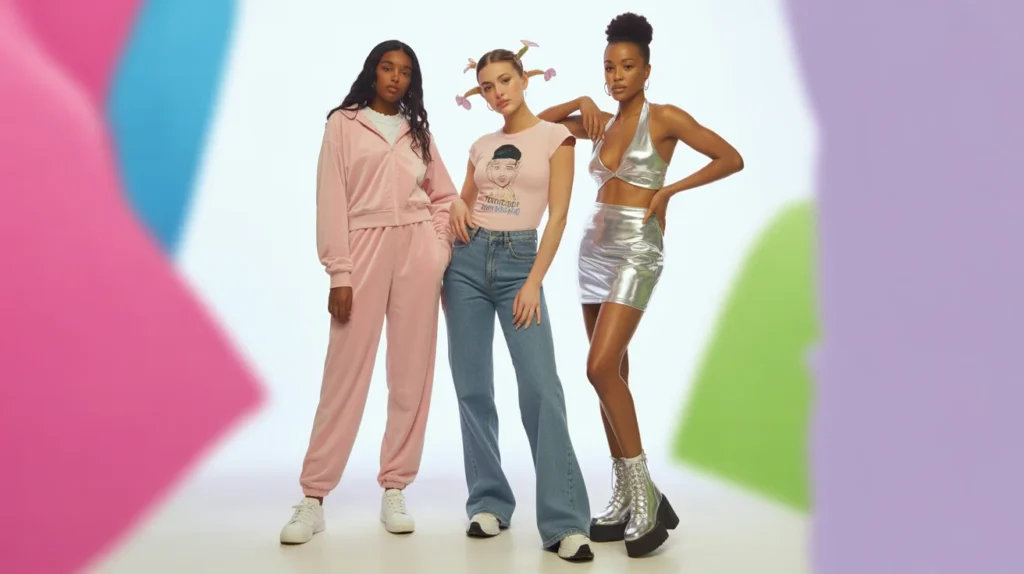
Tight, cropped T-shirts with playful graphics or logos defined the upper half of the Y2K silhouette. They exposed the midriff by default, often paired with low-rise bottoms. Contemporary styling tends to soften the look, layering them under oversized blazers or pairing them with higher-waisted trousers.
4. Mini Skirts
Mini skirts — denim, pleated, metallic — were central to the era’s emphasis on legs and movement. They were rarely understated and often paired with boots or platform heels.
5. Metallic and Futuristic Fabrics
Silver, holographic finishes, PVC — these materials reflected the era’s fascination with the future. Clothing borrowed from the visual language of technology, even when the garments themselves were impractical.
6. Cargo Pants
Originally utilitarian, cargo pants became a staple of streetwear. Their loose fit and multiple pockets offered a contrast to the otherwise body-conscious silhouettes of the time.
7. Platform Shoes and Chunky Sneakers
Footwear leaned heavily toward elevation. Platform sandals and chunky sneakers added height and visual weight, often balancing out slim or cropped clothing.
8. Denim on Denim
Britney Spears and Justin Timberlake’s coordinated denim outfits at the 2001 American Music Awards turned what might have been a faux pas into a defining moment. Layering denim became not just acceptable, but aspirational.
9. Statement Accessories
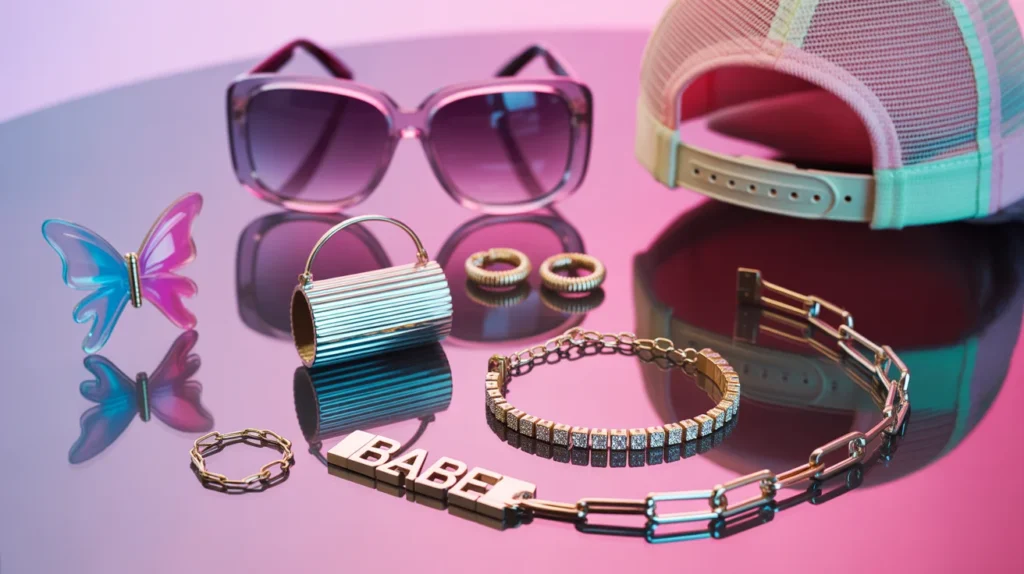
Accessories carried disproportionate importance. Butterfly clips, tinted sunglasses, baguette bags, nameplate necklaces, and trucker hats could define an outfit even when the clothing itself was simple.
10. Logo-Heavy, Bedazzled Pieces
Branding was not hidden. It was amplified. Logos appeared large, central, and often embellished with rhinestones. Wearing a brand meant displaying it.
Y2K Fashion Icons — The Celebrities Who Built 2000s Style
The trends did not emerge organically. They were shaped — and often dictated — by a small group of celebrities whose wardrobes functioned as public templates.
Paris Hilton’s style, built around velour tracksuits, rhinestones, and an almost theatrical embrace of pink, established the blueprint for the early 2000s “it-girl.” Her reality show extended that influence beyond red carpets and into everyday visibility.
Britney Spears translated pop stardom into fashion language. Low-rise jeans, crop tops, and her now widely referenced denim-on-denim appearance created a visual identity inseparable from her music.
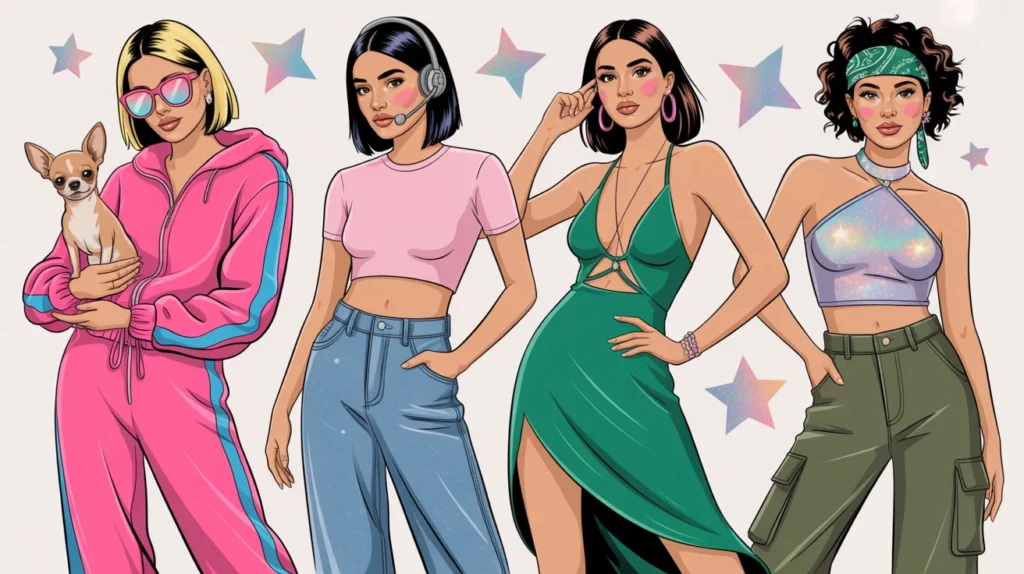
Beyoncé, particularly during her Destiny’s Child years, introduced coordinated stage outfits that blended performance wear with mainstream fashion. The silhouettes emphasized movement and confidence, often centered on the midriff.
Jennifer Lopez’s impact was both specific and systemic. The Versace dress at the Grammys was one moment, but her broader wardrobe — oversized sunglasses, fitted tops, statement belts — shaped how glamour was understood in the early 2000s.
Christina Aguilera pushed boundaries further, experimenting with cargo pants, cut-outs, and metallic fabrics. Her approach blurred the line between performance costume and everyday wear.
Around them, a wider circle of figures — Gwen Stefani, Lindsay Lohan, the Olsen twins — extended the aesthetic into adjacent directions, from punk influence to early boho.
The Brands That Built Y2K Fashion
Certain brands became inseparable from the era, not just because of what they sold, but because of how visibly they sold it.
Juicy Couture defined casual luxury through velour. Von Dutch turned trucker hats into status items. Baby Phat, led by Kimora Lee Simmons, merged streetwear with femininity, often marked by its rhinestone cat logo. Ed Hardy’s tattoo-inspired graphics introduced a different kind of visual intensity, while True Religion’s distinctive stitching made denim instantly recognizable.
Mall culture amplified these brands. Abercrombie & Fitch, Hollister, and Aeropostale created environments as much as clothing lines — dim lighting, curated music, and a sensory experience that made shopping itself part of the aesthetic.
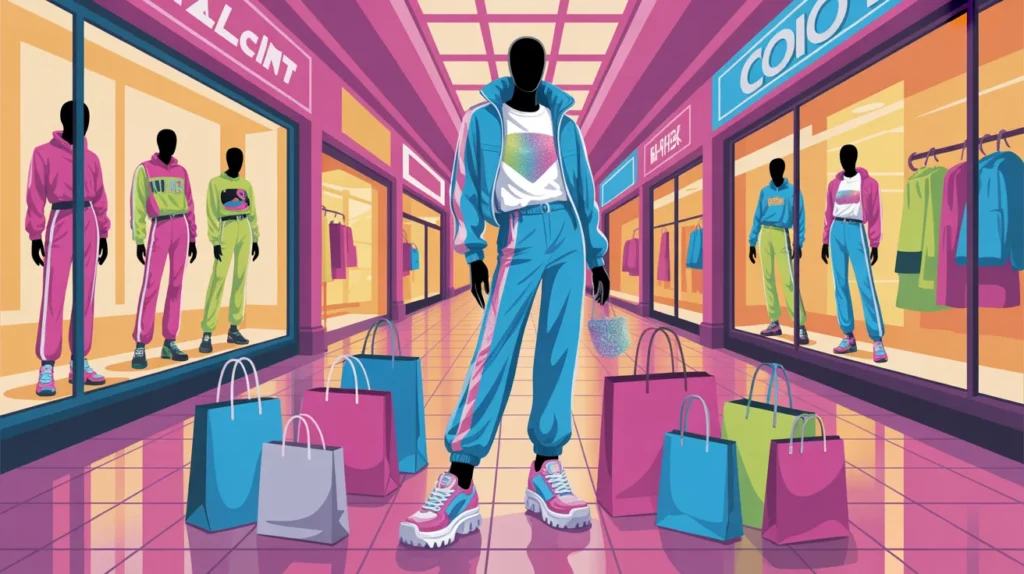
At the same time, hip-hop brands like FUBU, Rocawear, and Sean John expanded the reach of Y2K fashion, introducing oversized silhouettes, bold accessories, and a different relationship to branding — one rooted in cultural identity as much as visibility.
Luxury houses were not absent. Dior’s saddlebag, Fendi’s Baguette, and Louis Vuitton’s collaboration with Takashi Murakami brought Y2K aesthetics into high fashion, often blending playfulness with exclusivity.
Beyond the Mainstream — Y2K Subcultures
What is now labeled “Y2K” is, in reality, an umbrella. The original Y2K aesthetic — sometimes called Y2K Futurism — was rooted in metallic fabrics, cyber-inspired silhouettes, and a fascination with technology. It coexisted with other, more grounded or expressive subcultures.
McBling, which dominated much of the 2000s, emphasized rhinestones, logos, and visible luxury. Indie Sleaze, emerging slightly later, reacted against that polish with a more chaotic, deliberately unrefined approach. Scene and emo cultures introduced darker palettes, band affiliations, and highly stylized hair. Hip-hop fashion contributed oversized silhouettes and gold jewelry, while boho-chic moved toward layered, vintage-inspired looks.
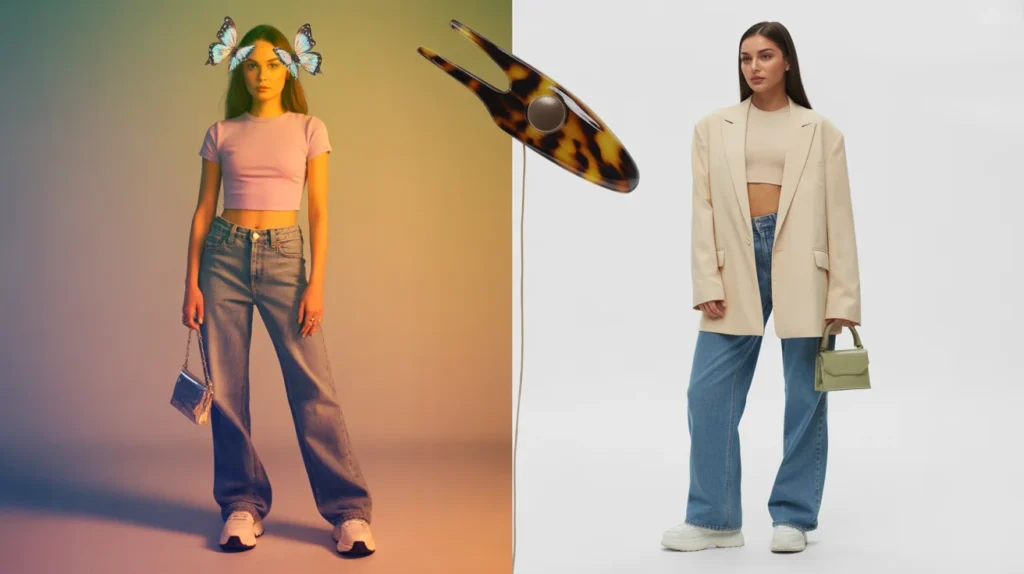
Modern reinterpretations blur these lines. Digital platforms compress distinctions that were once clearer, turning subcultures into interchangeable visual references.
Why Y2K Fashion Came Back
Fashion tends to move in cycles, and the 20-year interval is one of the most reliable. By the early 2020s, the early 2000s were due for reassessment.
TikTok accelerated that process. Short-form video made it easy to recreate outfits, compare eras, and circulate visual references rapidly. Hashtags dedicated to Y2K fashion accumulated billions of views, turning what might have been a niche revival into a widely recognized movement.
The appeal is not purely aesthetic. For many younger people, the early 2000s represent a period they did not experience directly but have encountered through media. It appears, in retrospect, less saturated by digital anxiety, more tactile, more playful. The clothing becomes a way to access that constructed memory.
Thrifting also plays a role. Platforms like Depop and Poshmark have turned secondhand shopping into a form of discovery, where finding an original Juicy Couture tracksuit or Ed Hardy piece carries a certain cultural value. Sustainability concerns reinforce this shift, making older clothing both environmentally and stylistically appealing.
Luxury brands have responded in kind, reissuing archival designs and referencing early 2000s collections. The revival is not accidental; it is reinforced from both grassroots and institutional directions.
How to Wear Y2K Fashion Today
The challenge is not access — it is interpretation. Wearing Y2K fashion now requires adjustment rather than replication.
The most effective approach is balance. A single Y2K element — a baby tee, a metallic skirt, a pair of low-rise jeans — can anchor an outfit when paired with more contemporary pieces. An oversized blazer, clean sneakers, or structured bag introduces proportion and restraint.
For everyday wear, combinations tend to be straightforward: a fitted top with relaxed jeans, cargo pants with a minimal tank, or a zip-up hoodie layered with modern basics. Evening looks lean more directly into the aesthetic — metallic fabrics, mini silhouettes, statement accessories — but still benefit from careful proportion.
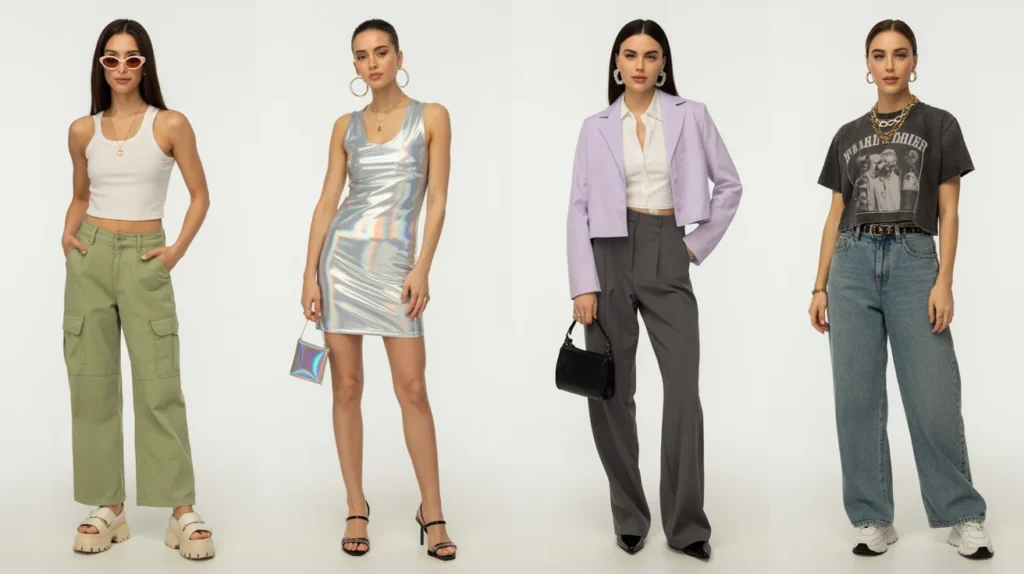
Work environments allow for subtler references. Accessories become the entry point: a structured mini bag, tinted sunglasses, or a single piece of jewelry that nods to the era without overwhelming the outfit.
The mistake most often made is treating Y2K as costume. The goal is not to recreate 2002 exactly, but to translate its elements into a different context.
Y2K Fashion FAQs
Is Y2K fashion still relevant in 2026?
It has moved beyond a short-lived trend and settled into a broader style vocabulary. Elements of it continue to appear across both streetwear and high fashion.
What is the difference between Y2K and McBling?
Y2K Futurism focused on metallics, technology, and a forward-looking aesthetic. McBling emphasized logos, rhinestones, and celebrity-driven glamour. The two overlapped but are not identical.
Where can authentic pieces be found?
Secondhand platforms such as Depop, Poshmark, and local thrift stores remain the most reliable sources.
Can men participate in Y2K fashion?
Yes. Baggy jeans, layered T-shirts, tracksuits, and accessories like caps and chains all fall within the era’s scope.
Conclusion
Y2K fashion endures because it resists restraint. It invites experimentation, tolerates excess, and treats clothing as a form of visible expression rather than quiet utility. Its return is not simply nostalgia, but a reminder that fashion cycles do not just repeat — they reinterpret.
The early 2000s offered a version of style that was willing to be impractical, playful, and occasionally contradictory. That quality, more than any specific garment, is what continues to resonate.